Saturday, August 9, 2014

Market yawns but geopolitical risks eyed

The eventful week started off on a high note but failed to sustain as global cues disrupted sentiment. Key indices ended lower on a weekly basis for the third time in the last five weeks
The 30-share BSE Sensex shed 0.6 percent in the week to close at 25,320 levels, while the 50-unit Nifty was down 0.5 percent at 7,567 levels. Investors continued to book profits in broader markets after making most of the recent bull-run which saw stocks from the space outperform the benchmark indices. Both BSE small-cap and mid-cap indices were down 1.1-1.2 per cent, in the week.
RBI’s credit policy sprung no surprises but the central bank’s outlook was distinctly hawkish.
Market remained volatile during the week, tracking weakness in rupee and escalating geopolitical risks. Russia-Ukraine tensions dominated the earlier part of the week while Friday saw US’ announcement of limited intervention in Iraq to check the advance of Islamic fundamentalists in the region.
Friday’s losses sparked off by a global sell-off in equities largely dragged the overall market performance this week.
US President Barack Obama on Friday authorised ‘limited’ airstrikes against militant outfit -Islamic State of Iraq and Syria (ISIS), in Iraq, to halt the latter’s bid to capture Erbil-the capital of Kurdistan region in Iraq, said reports.
The week started off on a positive note, with feeble anticipation of a potential surprise by Raghuram Rajan in the RBI’s bi-monthly monetary policy review. Although there was a near unanimous consensus on the Dalal street, that key rates will remain unchanged.
Tuesday's RBI credit policy was a non-event as key rates were left unchanged. The guidance given by the central banker was hawkish. He warned that inflation risks persist despite recent mellow in inflation figures, owing to a potential spike in food prices if monsoons disappoint.
CPI Inflation in June dropped to its 30-month levels and 400 bps down from its November 2013 high.
"The upside risks to the target of ensuring CPI inflation at or below 8 percent by January 2015 remain, although overall risks are more balanced than in June," said Rajan.
Rajan also said that RBI's goal was to bring consumer price-indexed inflation (CPI) down to 6 per cent by January 2014 and there was a need to look beyond the recent relief in inflation numbers. This prompted market men to give up any hopes of a rate cut in calendar year 2014.
However, the central bank slashed the statutory liquidity ratio (SLR) by 0.5 percent to unlock about Rs. 40,000 crore into the system. This failed to enthuse the market.
Brokerages and financial firms do not anticipate a rate cut till 2014-end. While HSBC upped the ante, saying they won’t rule out rate tightening ahead.
“We continue to expect the repo rate to be kept on hold through 2014 although a window of opportunity to cut may open around 4Q,” said ANZ Bank.
Market Internals
Among top Nifty gainers this week, ONGC & Wipro, Tech Mah, JSPL, ACC, Infosys, M&M surged between 2.5 percent-5 percent higher.
M&M reported a 4.3 percent growth in first quarter (April-June) profit at Rs 896.4 crore compared to Rs 859.8 crore in same quarter last year driven by operational performance.
Nearly all sectoral indices ended the week in red, barring IT & consumer durables. BSE Consumer Durables was up 3.1 percent; from the space Marico posted its first quarter earnings results. It beat street expectations both on bottomline and topline fronts but disappointed with its operational performance during April-June quarter. Consolidated net profit rose 17.5 percent year-on-year to Rs 185.3 crore driven by a healthy topline growth. Adjusted for the Kaya business which was demerged in October 2013, the growth in net profit was 19.4 percent.
CNX IT index was up 1.7 percent owing to a weakness in rupee against the dollar this week, in-line with global US dollar strength and weakness in emerging market stocks. The rupee posted its biggest single day fall (against the dollar) in six and a half months to 61.78 per dollar mark on Wednesday, on back of outflows from local equity and debt markets. Dollar demand from importers was also to be blamed, said experts.
From the pack, Infosys stock surged over 4 percent this week and fared among top Nifty performers. It hogged the limelight in the week after three of its retail investors and former top level executives, in a letter to the management, asked the firm to buy back stock worth Rs 11,200 cr, saying it will help check the "asymmetry of information" between management and investors.
Among the three former executives who shot off a letter to the Infy's board -TV Mohandas Pai, V Balakrishnan had served as chief fianancial officers (CFOs) while DN Prahlad as senior Vice President. The trio, according to reports, said that there is a need to announce a large and consistent buyback at the stock's 52-week high of Rs 3850-a-share, to show confidence in the management and the business model.
However, company sources told CNBC-TV 18 that they were "astonished" since ex-employees in question who demand a buyback now were themselves against the move when they were CFOs. They added that the company is at an inflection point and it is not the time to take rash decisions, and the new leadership be given the time to chart out its strategic course.
Cognizant lowered its revenue growth expectations for the full year to 14per cent from 16.5per cent. This sparked off concerns about the sector in general which witnessed a mixed quarter on the earnings front.
Bank Nifty and CNX PSU Bank indices slipped 2.4 percent, PNB, BoB, ICICI Bank Down, HDFC Bk, Axis Bank and SBI emerged on the losing front from the Nifty index.
Public lender State Bank of India (SBI) surprised street with the first quarter (April-June) net profit rising 3.3 percent year-on-year to Rs 3,349 crore on higher net interest income though it was impacted by higher provisions, tax cost and lower other income. Net profit in the year-ago period was Rs 3,241.08 crore. The growth in profitability was for the first time in last six quarters.
Among important earning results this week, Hero MotoCorp Ltd posted a net profit of Rs. 5627.60 mn for the quarter ended June 30, 2014 as compared to Rs. 5485.80 mn for the quarter ended June 30, 2013. The stock was down 1per cent at Rs2584. UBS, in a report, has maintained its ‘sell’ rating on the stock with a target price of Rs 2400. “Limited scope for margin improvement cost pressures to rise due to new facilities, higher R&D spends, start up investments in export markets. Honda expected to gain incremental market share in Motorcycles,” it said.
Expert Take
Market participants welcomed the recent correction, which they said loomed in the backdrop of rich valuations. They advised to make use if this as a buy on dips opportunity.
Dipen Sheth, HDFC Securties speaking to CNBC-TV18, said that he continues to be bullish on market. He said, deep cut in large cap stocks will offer meaningful opportunities.
He likes the financial space, especially SBI; among private sector banks, he is bullish on Axis Bank and ICICI Bank. Hero Motocorp and Maruti are his favourites from the auto space. He believes TCS will continue to grow current levels.
The recent correction notwithstanding, analysts remain bullish on markets. Too many headwinds — Russia, Gaza, Iraq, Rangarajan --- responsible for this correction, says Dilip Bhat of Prabhudas Lilladher of a market that fell a good 300 plus points on Friday. "We may see some more correction, but I will reiterate this is a buyer's market," he said. Next 15 days equity market may remain in corrective phase, but will like to add Divi's lab, L&T, Reliance , Lupin and L&T in his portfolio for the long term. "I will look at buying L&T at every correction."
Siddharth Bhamre of Angel Broking does not believe one should short this market now. He says the shorting quantum even in the bank Nifty will not see a breakdown. We are not at all bearish on this market, he says
Among other important developments during the week, the Cabinet has cleared a proposal to allow 100 per cent foreign direct investment (FDI) in Indian Railways.

Google to pay $250 million to fight illegal online pharmacies

 Google has agreed in a court settlement to spend at least $250 million over the next five years to help fight illegal online pharmacies selling to US customers, documents showed Friday.
The US Internet search giant made the commitment in settling a lawsuit from shareholders alleging Google failed to take adequate measures to prevent foreign online pharmacies from using its advertising network.
The lawsuit was filed in 2011 after Google paid a $500 million settlement to the US government over charges it sold advertisements to Canada-based online pharmacies which marketed drugs to Americans in violation of US law.
In a settlement filed in federal court in California, Google agreed to spend at least $50 million per year in each of the coming five years on "product quality operations, policy enforcement, and user safety initiative" to prevent the ads from appearing.
Google said its audit committee would set up a plan "to ensure compliance with federal and state laws and regulations" and to prevent the advertising of pharmaceuticals and supplements which violate the law running through its AdWords platform.
In the settlement with the US government, authorities said the online pharmacies from Canada used Google's Adwords programs, which deliver ads based on a user's browsing history and search queries, from 2003 to 2009.

All you need to know about Ebola

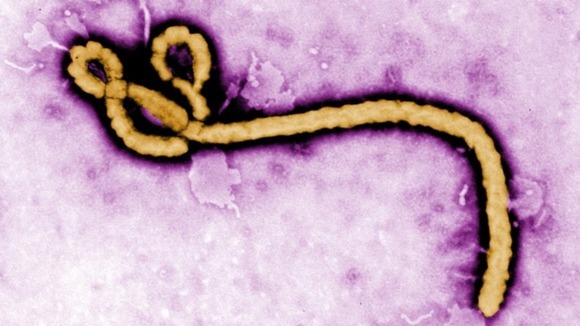
The origin of the deadly Ebola virus has been traced to Africa. The scientist who discovered the Ebola virus from a blood sample of a dying Catholic nun way back in 1976 in Congo warns that the latest outbreak is caused by the deadliest strain of the virus — 9 out of 10 infected will die from it.  

What is Ebola? 


There are four types of Ebola virus that infect humans. The most deadly is this strain from the current epidemic, known as the 'Zaire strain'. It is part of a small group of viruses that kills infected people within a couple of weeks. It has a very high mortality, much like rabies. 

Symptoms of Ebola 


The early symptoms of an Ebola infection include fever, headache, muscle aches and sore throat, according to the World Health Organization. It can be difficult to distinguish between Ebola and the symptoms of malaria, typhoid fever or cholera. Only in later stages do people with Ebola begin bleeding both internally and externally, often through the nose and ears. 

How does it spread? 


The Ebola virus is not airborne, so people would have to come into contact with the bodily fluids of an infected person. These include blood, sweat, vomit, feces, urine, saliva or semen — making transmission through casual contact in a public setting unlikely. 

Prevention 


If an Ebola outbreak is suspected, the premises should be quarantined immediately. Culling of infected animals, with close supervision of burial or incineration of carcasses, may be necessary to reduce the risk of animal-to-human transmission. Restricting or banning the movement of animals from infected farms to other areas can reduce the spread of the disease. 

In the absence of effective treatment and a human vaccine, raising awareness of the risk factors for Ebola infection and the protective measures individuals can take is the only way to reduce human infection and death. 

Treatment 


No licensed vaccine against the deadly Ebola virus is available. Several vaccines are being tested, but none are available for clinical use. 

Severely ill patients require intensive supportive care. Patients are frequently dehydrated and require oral rehydration with solutions containing electrolytes or intravenous fluids. 

No specific treatment is available. However, new drug therapies are being evaluated.

Markets Ride the Modi Wave

The victory of the BJP-led National
Democratic Alliance (NDA) in parliamentary
elections has triggered
a bull run in equity and currency
markets. Analysts are
already predicting the ‘mother of all bull runs’
in Indian equities. Some are even forecasting
that the rupee will appreciate
to 55 a dollar. Amidst all this
euphoria and changing investment
landscape, how should
retail investors view different
asset classes and build
a portfolio?
Equities: Between
May 12, when the exit polls
hinted at a comfortable victory
for the NDA, and May 19,
the Sensex jumped close to 6%
from 22,994 to 24,363. On the day
of the results, the Sensex breached
25,000 before settling at the 24,100 level at
the close of day.
Despite the run-up, the valuations are
still at a fair level and experts see the bull run
continuing at least for a year. Large brokerage
houses have already revised upward their
year-end target for the Nifty and the Sensex.
Nomura has raised its 2014 target for the
Sensex to 27,200 from 24,700, while Citigroup
raised its year-end target to 26,300. Though
the stock market sentiments are positive, the
investment strategy has to be different from
what it was six-eight months ago in order to
make gains. The sectoral outlook has
changed, and so has outlook for stocks of different
market caps.
The large-cap and defensive sector bias
has to give way to a high-beta, cyclical and
mid- and small-cap strategy to gain in the
short and medium term. Sectors such as energy, PSU banks, infrastructure and metals are back in
focus as pharma, FMCG and IT stocks look for a correction
in the short-term. The infrastructure sector may
see a boost in the long-term, but analyst remains cautious
on the sector. The focus is also on PSU oil companies
such as ONGC, Oil India, HPCL and IOC as steps
like rise in gas and diesel prices, lowering of subsidy
burdens are positive for these stocks.
Debt Market: The debt market has not shown the same
kind of exuberance as the equity market as it is still
cautious about the next government’s fiscal policies.
Analysts feel the new government may have to borrow
more by issuing bonds in the short term, thereby keeping
the fiscal deficit high for some time. This has led to
fall in bond prices as 10-year government bond yields
rose to 8.9% from 8.83% on May 16. “We find these fears
(the government may borrow more) unfounded. We
believe that the government would go on the path of fiscal
consolidation and sooner or later bond yields will
fall,” says Dhawal Dalal, fund manager, DSP BlackRock
Mutual Fund. He sees 10-year government bond yields
at 8.5% by December this year. Retail investors, depending
on their risk tolerance, can invest in accrual funds
(short-term funds, FMPs) or duration funds. Accruals
funds (which follow the hold-to-maturity strategy) have
given good returns in the past couple of years and can
still do well if invested at these levels.
Gold: Though gold prices are internally driven, the
metal gained domestically last year due to rupee depreciation
and import restrictions put by the government
to control the current account deficit (CAD), a situation
where imports exceed exports. However, with improving
CAD due to which the new government may ease
certain restrictions, and appreciating rupee, gold prices
are likely to correct in the 6-12 month period. “Prices
will depend on three factors: international prices, rupee
movement and government policies vis-à-vis restriction
on gold imports. If the new government eases these
import restrictions, domestic gold prices are likely to
come down in the short term,” says Chirag Mehta, Fund
Manager, Quantum Mutual Fund. However, he says that
in the long-term, sentiments remain favourable for gold.

Sunday, July 27, 2014

Mobile tech reshaping the health sector

Your smartphone is not only your best friend, it's also become your personal trainer, coach, medical lab and maybe even your doctor.
"Digital health" has become a key focus for the technology industry, from modest startups' focus on apps to the biggest companies in the sector seeking to find ways to address key issues of health and wellness.
Apps that measure heart rate, blood pressure, glucose and other bodily functions are multiplying, while Google, Apple and Samsung have launched platforms that make it easier to integrate medical and health services.
"We've gotten to a point where with sensors either in the phone or wearables gather information that we couldn't do in the past without going to a medical center," says Gerry Purdy, analyst at Compass Intelligence.
"You can do the heart rate, mobile EKGs (electrocardiograms). Costs are coming down, and these sensors are becoming more socially acceptable."
The consultancy Rock Health estimates 143 digital health companies raised $2.3 billion in the first six months of 2014, already topping last year's amount.
An analysis by the global consultancy Deloitte suggests that smart glasses, fitness bands and watches, should sell about 10 million units in 2014, generating over $3 billion and that the number of devices will hit 170 million by 2017.
"Many health- and fitness-related technologies have multiple applications and encourage wearers to be more engaged in their own fitness, help modify behavior by reminding wearers to exercise or take medication," Deloitte's Karen Taylor says in a July report.
- Patients take control -
The California startup MD Revolution has created a system adapted from a concierge medicine practice, which allows participants to track a variety of health indicators using mobile or wearable devices.
The company uses fitness and other tracking devices to address "imminently preventable conditions such as diabetes or hypertension," says spokeswoman Lisa Peterson.
"We are creating a new specialty in digital health in which people can interact with nutritionists, exercise physiologists to receive a plan and coaching, to prevent or reverse chronic diseases," she told AFP.
Peterson said the company using existing commercial devices from makers such as Fitbit or Jawbone and plans to launch its own app for its users.
She noted that the launching of health platforms by Google and Apple "will make it easier for us to integrate more devices and apps."
Recent studies suggest that people who use connected devices to monitor health and fitness often do a better job of managing and preventing health problems.
A study led by the Center for Connected Health found that people who use mobile devices did a better job of lowering dangerous blood pressure and blood sugar levels.
A separate study published in the July 2014 issue of Health Affairs found that data collected by devices is not only useful for patients but can help doctors find better treatments.
"When linked to the rest of the available electronic data, patient-generated health data completes the big data picture of real people's needs, life beyond the health care system," said Amy Abernethy, a Duke University professor of medicine lead author of the study.
Some firms have even more ambitious plans for health technology.
Google, for example, is developing a connecting contract lens which can help monitor diabetics and has set up a new company called Calico to focus on health and well-being, hinting at cooperation with rivals such as Apple. And IBM is using its Watson supercomputer for medical purposes including finding the right cancer treatment.
- Better care, good-bye office? -
Joseph Kvedar, a physician and founder and director of the Boston-based nonprofit Center for Connected Health, said mobile technology has the potential to keep people engaged in their own care, and lessen the burden on the health care system.
"One of our goals is to do away with the vast majority of offices," Kvedar told AFP.
"That's not because office visits are a bad thing but you should think about care as a continuous function and mobile technology allows you to do this in a way you could never do before."
Kvedar said some health platforms that required patients to upload data had a mixed record but that mobile is growing because "people are addicted to their smartphones."
Doctors should not fear this technology, he said, because patients who use it often stay healthier.

"For the vast majority of things, you the patient are in charge and we are just the sherpas," he said. "Engaged patients get better."

How to settle your credit scores

A credit score, whether from CIBIL or Experian, can have quite a say in whether you succeed in your loan or credit card applications, and in the interest rate you may get. But errors can crop up in your credit report due to no fault of yours, wholly messing up your finances.
So if you want to apply for a loan, it’s best to get your first credit score before making the application, just to be sure there are no surprises in store.
Identifying and rectifying any mistake in the score can then be done quickly.
The mistakes made
Two main factors account for credit score mistakes. First, it can be wrong entries at the time of making inputs, such as an extra zero added accidentally to a personal loan of ₹100,000.
And second, credit information companies rely on lending institutions sending data every month.
A delay or neglect in this updating can lead to payments not being credited to you when you apply for the score. Says Harshala Chandorkar, Senior VP, Consumer Relations, CIBIL, if you access your report within 45 days of making a payment, it may not be updated.
It’s a red flag when the date reported (date on which data is submitted by that lender) on your account is older than two months and your payment is not reflected.
A CIBIL TransUnion score, for example, is split into personal details and loan account details.
Both can have mistakes. Personal detail errors can be a mis-spelt name, incorrect date of birth, gender, address or telephone number. Identification details provided, such as PAN, voter ID or passport, could also be wrong. An incorrect PAN can have far-reaching implications, as that is linked to any financial transaction you make.
Loan account mistakes can similarly be disastrous. Your loan status may be wrong — stating overdue when you have made all payments or latest payment not updated.
Loan accounts you closed can be classified as written off or defaulted, especially if the lending institution hasn’t been updating details on time.
This can send credit scores crashing. The same loan details can accidentally show up more than once, raising the total credit, known as duplication errors.
Or your details can be mixed up with someone else’s, leaving you with loans you’ve never taken, or several requests for credit which you haven’t made, called ownership errors. In the most extreme situation, if your details are stolen and misused, that can reflect in your credit score details.
Correcting the mistakes
If you find mistakes in your credit score, report it immediately to the credit information company. It cannot make corrections on its own; it takes it up with the institution in question and, once confirmed, rectifications are done.
Reporting CIBIL score mistakes can be done online through their Dispute Resolution. Fill up the form available through their website www.cibil.com.
Give your personal details as well as a detailed explanation of the mistake.
If you are uncomfortable working online, send a written request to their Mumbai address. Always mention your CIBIL control number, available in the top right-hand corner of your report.
Rectifying Experian score mistakes can similarly be done by sending written requests. They require supporting documents too, such as identity and address proof, and sending them to their Mumbai office.
Barring complications, disputes are settled within a month’s time. Personal details may be quickly settled since it involves looking through identification proofs.
Loan account mistakes can take some time as a result of back and forth communication between the lending institution and the credit information company.
Recourse
Should the mistake you point out be disputed by the institution, the credit information company will let you know.
Theoretically, you can re-apply for correction, though it is rather pointless. Take it up with the bank. Protect your own interests. Chandorkar suggests maintaining proofs, such as loan closure letter, payment confirmation letters or emails, especially if you’ve settled previously written off or overdue accounts.
She also emphasises the need to keep your lender up to date with your personal details so that necessary changes and communication can be made.
Credit information companies too fall under the purview of the Reserve Bank. You can approach the banking ombudsman if you are still dissatisfied.
If all else fails, the consumer court is your last resort. 

Indian Institute Of Management(IIMs) CAT 2014 NOTIFICATION

For those who are attempting cat 2014
cat 2014 is 2 day testing window(4 sessions) 16th&22nd november of 2014 will be conducted by iims as a pre-request for admission of a various management programmes

Information Sources

CAT website : www.iimcat.ac.in(from 1st aug 2014 it is availiable)
IVRS no : 1800-2100-151

CAT ELIGIBILITY

The candidate must hold a Bachelor’s Degree, with at least 50% marks or equivalent CGPA [45% in case of the candidates belonging to Scheduled Caste (SC), Scheduled Tribe (ST) and Differently Abled (DA) (It may also referred to as Persons with Disability (PWD) category)], awarded by any of the Universities incorporated by an act of the central or state legislature in India or other educational institutions established by an act of Parliament or declared to be deemed as a University under Section 3 of the UGC Act, 1956, or possess an equivalent qualification recognized by the Ministry of HRD, Government of India. The percentage of marks obtained by the candidate in the bachelor’s degree would be calculated based on the practice followed by the university/institution from where the candidate has obtained the degree. In case the candidates are awarded grades/CGPA instead of marks, the conversion of grades/CGPA to percentage of marks would be based on the procedure certified by the university/ institution from where they have obtained the bachelor’s degree. In case the university/ institution does not have any scheme for converting CGPA into equivalent marks, the equivalence would be established by dividing the candidate’s CGPA by the maximum possible CGPA and multiplying the result with 100. Candidates appearing for the final year of bachelor’s degree/equivalent qualification examination and those who have completed degree requirements and are awaiting results can also apply

PAYMENT OF REGISTRATION FEE

The registration fee is ₹ 1600 for general nc-obc and ₹800 for sc,st,pwd(da) candidates

REGISTRATION  FOR CAT 2104 

The registration  window opens from 6th aug 2014 and will close on 30th sep 2014
candidates can download their admit car from 16 th oct 2014 


Wednesday, July 23, 2014

India likely to grow at 6 per cent in 2014-15: Harvard professor

The Indian economy is likely to grow at six per cent in 2014-15 and if the new government delivers on its promise of good governance, reversion to a growth rate of around 7-8 per cent can occur in coming years, Harvard University professor Gita Gopinath said.
"Let's just say that 6 per cent growth rate in FY15 would not be unreasonable... if the Modi government delivers on its promise of good governance, speedy implementation, improved infrastructure and manufacturing revival, 7-8 per cent growth is certainly within reach," she said.
As per the Economic Survey for 2013-14, India's GDP growth rate will improve to 5.4-5.9 per cent in the current fiscal after remaining at sub-5 per cent level for past two years.
The Survey added that reversion to a growth rate of around 7-8 per cent can only occur beyond the ongoing and the next fiscal. The domestic economy was expanding by over 9 per cent before being hit by the global financial meltdown of 2008. "The Budget provided few details on how the fiscal deficit will be reduced," she said on Finance Minister Arun Jaitley's resolve to bring down the the fiscal deficit to 4.1 per cent in 2014-15.
"There were some new revenue sources, like the increase in cigarette taxes and the service tax base, but bigger changes on the expenditure end will be required to make the fiscal deficit sustainable," said Gopinath, the first Indian woman to become a professor at the Economics Department of Harvard University.
She also pitched for India's rating upgrade and underlined the need for fiscal prudence. "If the economic environment improves and higher growth rates return there is certainly a case for an upgrade. One of the "do no harm" pieces of the Budget is that it did not introduce new subsidies and handouts. That is a welcome sign of fiscal discipline," she added.
Describing Modi government's first Budget as a "safe" one, Gopinath said among the announcements that caught her attention included a serious resolve to move to Goods and Services Taxes (GST) regime and cutting subsides, including those on fertilisers

Jet Airways chairman says looking to restructure debts, talking to bankers

Jet Airways Ltd said the country's No. 2 airline by market share will look at selling planes and restructuring its debts as it tries to find ways to end the losses that have plagued it for years.
"We are looking at a lot of consolidation (of our fleet)," Jet's Chairman Naresh Goyal said at a press event in New Delhi on Wednesday. Goyal said the carrier is talking to its bankers without giving details of the discussions.
Like all but one of India's major airlines, Jet is losing money fast, beset by high costs, low fares and cut-throat competition in its domestic market.
The airline, which has not reported an annual profit since 2007, set out a three-year restructuring plan in May centred on cutting costs and boosting efficiency.
As the carrier struggles to turn around its fortunes, it also named Cramer Ball as its fourth chief executive within the space of a year, pending regulatory approvals.

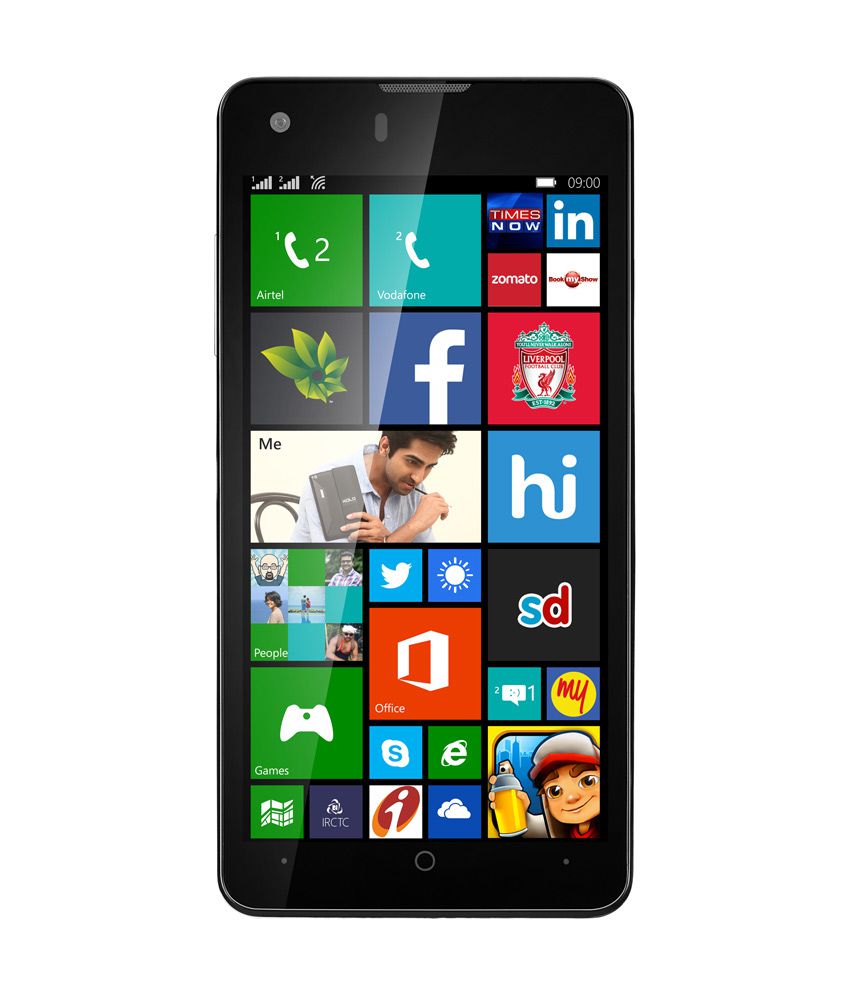
Xolo Q900s With 4.7-Inch qHD Display Launched at Rs. 9,999

Xolo has launched its latest Q-series smartphone, the Q900s, at Rs. 9,999. The Xolo Q900s is now listed on the company's site without availability details; however, we expect that the company will announce them in the coming days.
Notably, the new Xolo Q900s can be considered as an Android variant of the recently unveiled Win Q900s, which is a Windows Phone 8.1-based smartphone. Much like the Win Q900s, the company is again touting Q900s smartphone's lightweight design of 100 grams, which the company touts as a highlight of the handset.
The new Xolo smartphone expands the company's 'Q' quad-core smartphone series. It is a dual-SIM (GSM+GSM) device which runs Android 4.3 Jelly Bean out-of-the-box. The company notes that handset is upgradable to Android 4.4 KitKat.
It comes with a 4.7-inch (540x960 pixels) qHD IPS display and offers a pixel density of 234ppi, which is lower than the Win Q900s sporting HD display. The official listing notes that Q900s sports OGS (One Glass Solution) solution.
The smartphone continues the Xolo Q range quad-core tradition and is powered by a 1.2GHz Qualcomm Snapdragon 200 (MSM 8212) SoC alongside 1GB of RAM and Adreno 302 GPU.
The Xolo Q900s comes with 8GB of inbuilt storage, which is further expandable via microSD card (up to 32GB). It sports an 8-megapixel rear camera with LED flash and PureCel Sensor, while there is a secondary 2-megapixel front-facing camera. On the connectivity front, the Xolo Q900s includes 3G, Wi-Fi, Micro-USB, and Bluetooth.
The budget smartphone packs an 1800mAh battery, which according to the official listing, delivers up to 23 hours of talk time and up to 263 hours of standby time on 2G networks. The Xolo Q900s measures 135.8x67.2x7.2mm and is available in Black colour.
Earlier this week, the domestic handset maker launched its new A-series smartphone, the Xolo A700s, priced at Rs. 7,299.

Monday, July 21, 2014

Rupee Third on Fake Foreign Currency List in Switzerland

New Delhi/Berne: As a debate continues on alleged black money of Indians in Swiss banks, the authorities in Switzerland have come across a significant quantum of fake Indian rupee notes in their country - the third highest for any foreign currency after euro and dollar.
According to the latest counterfeit currency statistics released by Switzerland's Federal Office of Police (Fedpol), the number of fake euro notes seized in the year 2013 stood at 2,394, while there were 1,101 fake US dollar bills.
The number of fake Indian rupee notes found in Switzerland during 2013 stood at 403 - the third highest for any foreign currency. This included 380 fake Rs 500 notes and another 23 counterfeit Rs 1,000 notes.
However, the numbers have declined considerably since 2012 when Fedpol found as many as 2,624 fake rupee notes - the second highest among foreign currencies after 5,284 counterfeit US dollar notes at that time. The number of fake euro notes was third highest during that year at 2084.
The number of fake Swiss franc notes stood at 4,309 during 2012, but was higher than any foreign currency in 2013 at 3,729, as per details compiled by the Fedpol's Counterfeit Currency Unit.
Among other counterfeit foreign currencies found during 2013 were 99 fake British pound notes, 71 South African rand notes, 34 Deutsche Mark notes (German currency officially in circulation from 1948 till 2002 when euro was introduced), 23 Chinese yuan notes and 10 Canadian dollar notes.
The number of any other fake foreign currency notes was in single digits.

Reliance Industries Gains Over 2% as Q1 Beats Estimates

Shares in Reliance Industries which operates the biggest oil refining complex in the world surged over 2 per cent to Rs 1003 on Monday as it reported highest ever quarterly profit in a year for the quarter ending June 2014 on Saturday.
Its consolidated net profit increased 13.7 per cent year-on-year to Rs 5,957 crore bolstered by over 27 per cent y-o-y increase in its oil and gas revenue and higher refining margin.
RIL's net profit was much above the Street expectation as analysts on an average estimated the company to post a net profit of Rs 5,614 crore, according to Thomson Reuters data.
Reliance Industries reported 7.2 per cent y-o-y jump in its consolidated revenue to Rs 107,905 crore which was supported by a whopping 55.2 per cent increase in its US shale gas revenue.
Its revenue from the US shale gas business increased 55.2 per cent y-o-y to Rs 1,617 crore in the Q1 of FY15. But the silver lining is that gross profit from this segment increased 320 per cent to Rs 559 crore supported by expansion in gross profit margin to 34.6 per cent against 12.8 per cent y-o-y.
RIL's gross refining margin stood at $8.7 a barrel against $8.4 a barrel in the same quarter last fiscal. However it was lower than $9.3 a barrel reported last quarter.
Organised retail arm of RIL which turned profitable last quarter continued its growth momentum this quarter as well. Revenue from this segment increased 14.5 per cent y-o-y to Rs 3,999 crore and gross profit margin from this segment increased to 2 per cent against negative 0.4 per cent y-o-y.
Analysts believe organized retail and broadband service, which is scheduled to be launched next year will drive RIL's future profitability.
RIL's subsidiary, Reliance Jio Infocomm Limited ("RJIL"), which is the only private player with broadband wireless access spectrum in all the 22 telecom circles of India, plans to provide reliable fast internet connectivity and rich digital services on a Pan India basis.
In order to diversify its portfolio RIL is massively investing in retail, telecommunication and media segment. Mukesh Ambani, chairman of RIL last month said the company plans to invest $30 billion (Rs 1.8 lakh crore) over next three years.
Brokerages have turned positive post this result. Macquarie has maintained outperform on the stock with a target price at Rs 1,294 per share whereas CLSA has maintained buy on the stock with a target price at Rs 1,250 per share. CLSA says the stock could double as ebitda doubles in 3 years.
Deutsche Bank has also maintained buy on the stock but with a lesser target of Rs 1,210 per share. Deutsche Bank says natural gas price hike remains key near-term catalyst.
Reliance Industries shares have surged 4 per cent in last one week compared to 3.26 per cent surge in the BSE's oil and gas sub-index.
As of 9.20 a.m. RIL shares were up 2.08 per cent at Rs 997.05 compared to 0.54 per cent gain in Nifty.

Battle for Libya Airport Leaves At Least 47 Dead

Islamist-led militiamen have stepped up their assault on Libya's main airport, controlled by rival fighters, which the health ministry said on Monday had left at least 47 dead in a week.

The fighting, which erupted on July 13 and shut Tripoli international airport, also injured 120 people, according to figures for the week until Saturday.

The European Union condemned a fresh outbreak of violence on Sunday, two days after the collapse of a truce with the militia controlling the airport, which left five civilians dead according to local media.

A coalition of militias led by Islamist fighters launched an assault on the airport on Sunday, with clashes later spreading along the road to the capital.

By Sunday evening, fighting had subsided around the airport, security official Al-Jilani al-Dahesh told AFP, but clashes continued in the western suburbs of the capital, witnesses said.

"The airport was attacked this morning with mortar rounds, rockets and tank fire," Al-Dahesh told AFP.

"It was the most intense bombardment so far."

Dahesh said the militia which controls the airport -- based in Zintan, southwest of the capital, and seen by Islamists as the armed wing of liberals within the government -- responded with heavy fire.

Islamist militias have been joined by other armed groups, including the powerful Misrata Brigades, which played a key role in the 2011 UN-backed revolt that toppled and killed strongman Moamer Kadhafi.

The fighting has halted all flights and caused extensive damage to planes and airport infrastructure, with aviation officials saying Tripoli airport could be closed for months.

Pictures posted on social media showed a Libyan Airlines plane on fire as plumes of smoke billowed over the airport.

The carrier said on its Facebook page that one aircraft, a Bombardier CRJ900, was destroyed.

Another aircraft, an Airbus A330, was also later reported to have been destroyed by fire.

Loud explosions were heard in the city centre, 25 kilometres (15.5 miles) away, as battles raged along the airport road with rockets striking nearby homes.

'No military solution'

At least five civilians were killed in the Qasr Bin Ghashir neighbourhood, Mohamed Abderrahman, from the local town council, told private television channel Al-Nabaa.

The rival sides are among several heavily armed militias which have held sway in the oil-producing North African nation for the past three years.

Relentless violence across Libya this year -- including a war against Islamists in the east launched by a rogue general -- has sparked fears of all-out civil war.

The European Union mission in Libya issued a statement Sunday urging fighters to lay down their arms and spare civilians.

"The EU is concerned about the protracted conflict over Tripoli international airport and urges all parties to exercise restraint, to abide by international law and to respect civilians," it said.

"The EU calls on all parties to find a peaceful resolution through dialogue and compromise... there is no military solution to the crisis in Libya... the only option is a political solution and a peaceful democratic process."

On Thursday, Foreign Minister Mohamed Abdelaziz pleaded for UN help to build up Libya's army and police force and to protect vital sites, including the airport and oil installations.

The fighting mirrors a deadly power struggle between liberals and Islamists in the General National Congress, Libya's parliament and top political authority.

A new parliament was elected last month after the GNC was repeatedly accused of trying to monopolise power.

Results of the vote had been due to be announced Sunday, but the electoral commission announced a delay until Monday.

The growing lawlessness in Libya has alarmed neighbouring states that fear a spillover of violence.

On Saturday, militants attacked a checkpoint on Egypt's border with Libya, killing 22 soldiers, the Egyptian military said

Twitter to unveil new metrics to show wider reach

Bangalore: Twitter Inc, which has been struggling to revive flagging user growth, is expected to introduce new metrics to show that its microblogging service has a wider audience who may not necessarily be logged in to their accounts, the Wall Street Journal reported.
The company, which went public in November, is expected to launch four new metrics when it reports second-quarter earnings on July 29, the Journal reported, citing people familia
r with the matter.
The shift is aimed at changing Twitter's perception as a social network to something similar to Google Inc's YouTube, whose videos are often accessed through other sites.
Tweets are often embedded on other sites or are shown scrolling on television screens, but the company's current metrics do not take those audience into account.
Twitter currently measure its reach using traditional metrics such as monthly active users, monthly unique visitors and timeline views.
The company may now reveal details of how users interact with tweets, including the number of people clicking on links, or those favoriting or retweeting messages, according to the Journal.
Twitter has reported lackluster user and usage growth for the last couple of quarters and its stock price has nearly halved in the last six months.
The company named Anthony Noto as chief financial officer in July, putting a former Goldman Sachs executive who led its IPO last year in charge of its finances.
Twitter's Chief Operating Officer Ali Rowghani departed last month after clashing with Chief Executive Dick Costolo over whether he should continue to oversee product innovation.
Twitter declined to comment on the Journal story.

Sunday, July 20, 2014

Watch: Should India Have a Uniform Civil Code?


NDTV Opinion : Fault(y) Lines of Poverty

(Sonia Singh is the Editorial Director, NDTV)

As a mother of young kids, I find myself listening to this catchy song from 'The Jungle Book' all the time, sage advice from a Bear... "Look for the bare necessities, the simple bare necessities, forget about the trouble and the strife." Like all seemingly simple homilies, however, cracking this basic equation for India's policymakers is today the single biggest challenge we face as a nation, increasingly hurtling towards an unsustainable divide between two Indias. 
 
Given the total amount of money spent by the Government of India on social welfare schemes (an allocation of 3,38,408 crores in the new General Budget alone) today, we are still in a situation where three in every 10 Indians are poor, or one-third of our urban population lives on less than Rs. 47 a day according to a new report on measuring poverty by D C Rangarajan, former Chief Economic Advisor to the Prime Minister. A global UN report released this week, has an even bleaker picture - one-third of the world's poor, it says, lives in India, the highest number of extremely poor people in the world.
 
Yet, our single-minded focus on POVERTY as the most crippling problem facing India's growth today is diverted by theoretical debates every time a new poverty line figure is mooted by a high-level committee. The latest from Dr C Rangarajan (someone who's had his hands full determining both poverty figures and gas pricing formulas, ironically) says the cut-off for a family to be considered poor is Rs. 4860 per month in rural areas and Rs. 7065 per household in urban areas. This new figure, in one fell swoop, changes the number of people considered poor in India from nearly 270 million according to the Tendulkar committee to 363 million according to Dr Rangarajan's commitee. That's nearly a 100 million people's lives impacted in terms of whether they are eligible for old age pensions, Indira Awas Yojnas, free beds in hospital etc just by a more realistic look at what poverty means. Even more astounding is the breezy disregard with which this potentially huge human cost of exclusion of so many people had been discounted, you hear not a murmur of protest from people who have now been 'elevated' to a poor status virtually overnight, precisely because these numbers matter so little to their daily lives.
 
So, why exactly do we need a poverty line at all, especially when the world's largest food security scheme, India's Right to Food actually IGNORES this statistic. The act passed by Parliament makes it clear that 75 per cent of rural households and fifty per cent of urban households must have access to subsidised food, a fact which seems to contradict the government's own numbers on how many people in India are actually poor. The Rangarajan report sheds some clarity on the thinking behind this poverty line, while admitting its limitations. He says, "Nevertheless, there is need for a measure of poverty. Only then, it will be possible to evaluate how the economy is performing in terms of providing a certain minimum standard of living to all its citizens. Measurement of poverty has, therefore, important policy implications."

Yet, it's exactly because this is so crucial in terms of policy, that determining a poverty line as an aggregation of numbers based on consumption, spending patterns etc and not as a measure of human dignity is deeply flawed.

For instance, the poverty line places too much emphasis on the PERSONAL spending of an individual or a family unit, what it doesn't factor in is the cost paid for the failure of public services which are meant to be free. So, the assumption is that a person below the poverty line will have access to free health services when the reality is the heaviest financial burden for a poor family is usually health related. Poor people are being forced to pay for private health services precisely because the state is failing them in this area, yet this and expenses on, say, education are not being factored in, to determine how much a family actually needs to live an extremely basic existence.
 
Another crucial aspect which is too often ignored in looking at a statistical definition of poverty are the human and social implications of poverty. A poor person, especially in urban India, doesn't exist in a world filled with other people living on Rs. 42 a day or even people near his level of income. He works, interacts, co-exists with people for whom his monthly income can be equivalent to a restaurant bill for one meal. Incomes may well be on the rise but statistics show that the divide between the poor and the middle class in India (forget the super rich) is also growing at a higher rate. As Professor Amartya Sen puts it, "Our vision of India cannot be one that is half California, half sub-Saharan Africa." On the NDTV Dialogues this week, Professor Abhijeet Banerjee, author of 'Poor Economics' stated his case even more forcefully, saying its "...this process of growing exclusion which is leading to volatile processes, the outcome of which is playing out even in the recent rash of rapes." In the same programme, Harsh Mander who just released the India Exclusion Report points out that a child ragpicker in Delhi can earn up to Rs. 150 a day which would make him enormously wealthy as per this poverty line, yet it has no value because it can't get him a roof over his head or admission to a school.

So, are we in this debate actually addressing the key question - how much is enough for every Indian citizen to live a life where at least the bare necessities are taken care of? The McKinsey Global Institute in a recent report uses a completely different model, the "empowerment line," which has eight basic criterion including food, healthcare, energy, housing, clean drinking water, sanitation, education, and social security. Is this a more workable one for India to adopt? By 'underreporting' the poor, do government committees and planning mandarins actually do the country a larger disservice? Do we also, by adhering to textbook definitions, confine ourselves to textbook solutions without the political will to actually reboot our entire system of poverty alleviation?
 
Mohammed Yunus, founder of Bangladesh's Grameen Bank has said, "Poverty is the absence of all human rights. The frustrations, hostility and anger generated by abject poverty cannot sustain peace in any society."

Being poor is not an individual affliction, it's India's affliction. The poor cannot be wished away by rolling up a car window and meeting the challenge to provide every Indian a life of basic dignity. A life where at least the bare necessities are available is what will eventually be the litmus test of us as a society, as one nation.

http://www.moillusions.com/aphex-twins-devil-face-illusion/

10 Things You Should Know ......

BJ's nocabbages: 10 Things You Should Know - Episode XIII: Santosh Trophy , started in 1941, is probably the oldest football tournament in India. It is named after the late   Maharaja Sir Manmath...

Sunday Reads - Facebook is Blue because ...

BJ's nocabbages: Sunday Reads - Facebook is Blue because ...: Facebook is blue because Mark Zuckerberg is colourblind. ( Gizmodo ) Everything need to know about Facebook's controversial emotion ...

Datagraphic - Drinking Water Facility in Schools

BJ's nocabbages: Datagraphic - Drinking Water Facility in Schools: Over the last few decades, the Government of India has been investing a lot in ramping up infrastructure in elementary and primary schools....